CNN ran a short segment recently. Dan Buettner, the researcher who mapped the world’s blue zones, sat down to describe what people in those regions eat to start the day. The plate looked nothing like the American one. No stack of pancakes. No bacon. No drive-through window.
The breakfast that is not eggs and bacon
Breakfast in a blue zone tends to be plant-forward, plain, and eaten slowly. Beans and rice are a common morning staple on Costa Rica’s Nicoya Peninsula. Miso soup and rice show up in Okinawa. In Loma Linda, older residents often start with oatmeal or a simple tofu scramble. The food is ordinary. The pattern is the point.
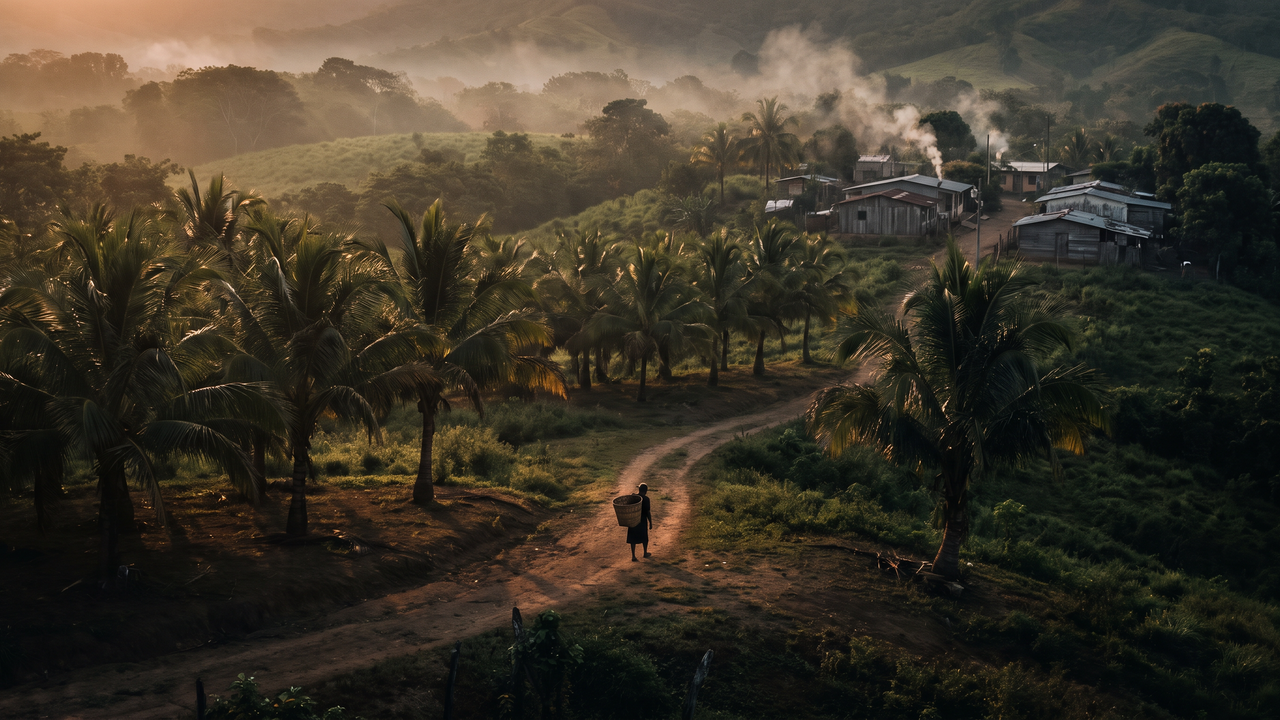
One of the five blue zones is in Costa Rica
The blue zones are five places where an unusually high number of people reach one hundred and stay healthy while they do it. The Nicoya Peninsula is one of them. I live roughly ninety minutes from it. When I moved to Costa Rica in 2021, I was thinking about tax and the cost of living. I was not thinking about breakfast. The breakfast changed anyway, and so did the length of my walk to buy it, and the number of neighbors I greet on the way.
Genes are not the story
One figure from this research stays with me. The Danish Twin Study found that genes account for only about twenty percent of how long the average person lives. The other eighty percent comes down to lifestyle and environment. Where you wake up shapes what you eat, how far you walk, and who sits across from you. Those small daily facts compound across decades.
I will be straight about the science. Blue zone research is observational. It shows patterns, not proof, and some researchers have pushed back on how far the idea has been stretched. The underlying habits, though, are cheap, ordinary, and well supported: plants on the plate, movement built into the day, and meals shared with other people.
What this has to do with relocation
This is the part most people planning a move never account for. A relocation plan usually starts with numbers — income tax, capital gains, the cost of a two-bedroom near the water. Those numbers matter. They are also not the whole ledger. The number I did not plan for was how the place itself would rewrite my ordinary Tuesday.
Where you plant your domicile is a daily-life decision long before it is a financial one. The texture of the day — the food within reach, the distance you move on foot, the table you sit at — belongs in the plan next to the tax rate, not beneath it.
A project taking shape in Hojancha
There is a reason this sits close to home for me. I am developing an agro-tourism experience in Hojancha, in the hills of the Nicoya Peninsula, built around the connection between indigenous farming techniques and how long people here live. The old methods — what gets planted, how it is grown, and how it ends up on the table — are a large part of the story the research keeps circling. It is early work, and I will share more as it takes shape.
Thinking about where to build the next chapter?
The daily texture of a place is worth planning for as deliberately as the finances. That is the work we do together.
Book Your Exit Strategy Session
Or begin with the Full 180 group coaching program.
This article is general information about international relocation and lifestyle. It is not medical, tax, or legal advice. For guidance specific to your situation, consult a licensed professional in the relevant jurisdiction.
Get Going.™