
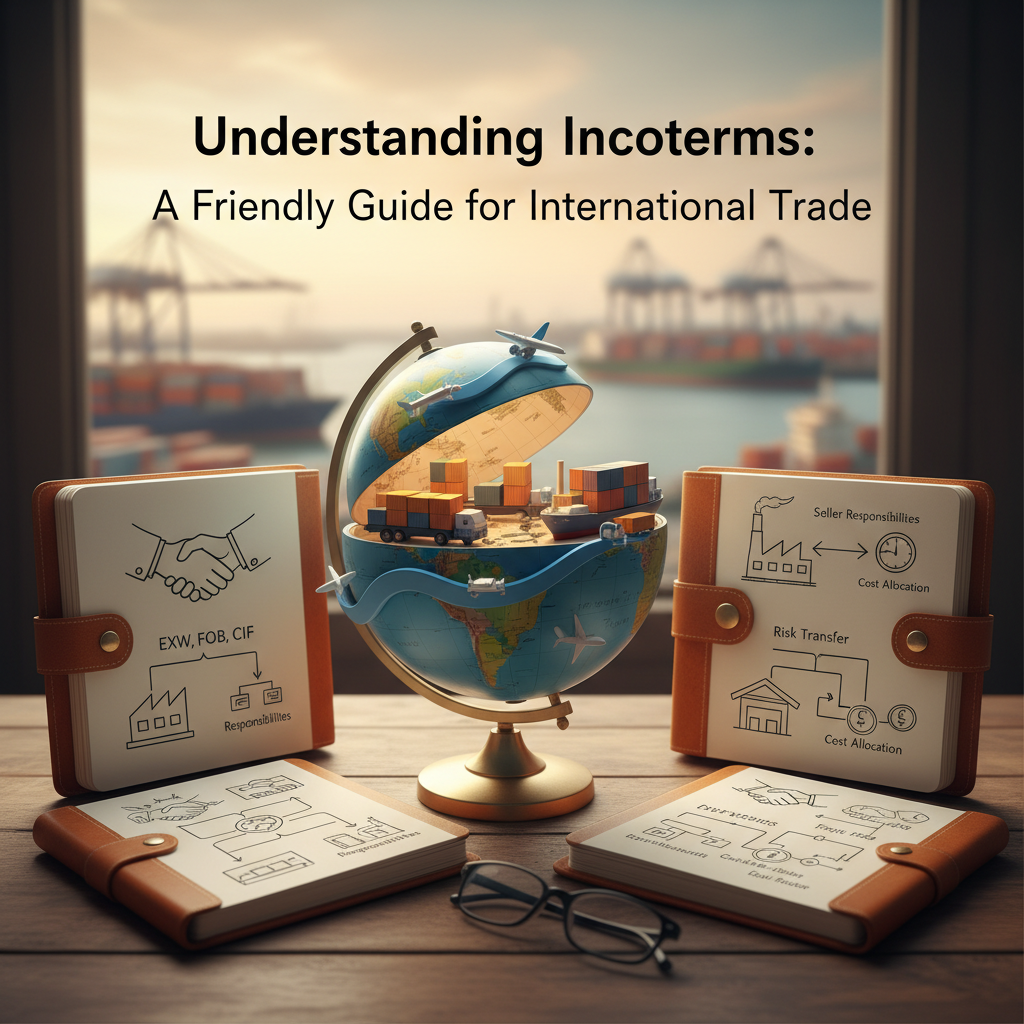

Have you ever wondered who is responsible for what when goods change hands across borders? Or how companies avoid misunderstandings during international shipments? The answer often lies in a set of rules called Incoterms.
Incoterms, short for International Commercial Terms, are globally recognized rules published by the International Chamber of Commerce. They clarify the responsibilities of buyers and sellers in international transactions. This helps prevent surprises, reduces confusion, and ensures smooth customs and shipping processes.
Why Are Incoterms Important?
When trading across borders, it's not just about agreeing on the price. It’s also about knowing who handles the costs, risks, and paperwork at each stage of the shipment. Incoterms cover this by defining specific points in the process where responsibilities shift from the seller to the buyer.
Basic Structure of Incoterms
Incoterms are grouped into four categories based on how much responsibility the seller takes on:
- EXW (Ex Works): The seller’s responsibility ends when goods are made available at their premises. The buyer handles everything else — transport, export, and import.
- F Terms (FCA, FAS, FOB): The seller handles delivery to a carrier or port, but the buyer takes over responsibilities during transit.
- C Terms (CFR, CIF, CPT, CIP): The seller takes on more responsibility, covering costs up to a named destination, but risks transfer before delivery.
- D Terms (DAP, DDP, DPU): The seller bears the most responsibility, taking care of most costs and risks until goods reach the destination specified by the buyer.
Common Incoterms and What They Mean
Some Incoterms are used more often than others. Here are key examples:
- FOB (Free On Board): The seller handles everything up until goods are loaded onto the ship. From there, the buyer takes responsibility.
- CIF (Cost, Insurance, Freight): The seller covers costs, insurance, and freight up to the destination port. Risks transfer once goods are onboard the ship.
- DDP (Delivered Duty Paid): The seller handles all responsibilities, including customs clearance and delivery to the buyer’s door.
How Incoterms Impact Your International Transactions
Choosing the right Incoterm can save time, money, and frustration. For example, if you’re a buyer unfamiliar with export customs, selecting DDP offers peace of mind. Conversely, sellers might prefer FOB to limit their responsibilities after goods are onboard the vessel.
It’s vital to specify the Incoterm clearly in your sales contract. Ambiguity can lead to disputes, delays, and unexpected costs.
Final Thoughts
Understanding Incoterms is about grasping responsibilities at every stage of a shipment. They serve as a straightforward way to reduce misunderstandings between trading partners worldwide. Whether you’re importing or exporting, knowing which Incoterm works best for your situation can make international trade smoother and more predictable.
Having clarity on these terms supports better planning, cost management, and compliance. It’s a simple, focused step toward more efficient global transactions.