
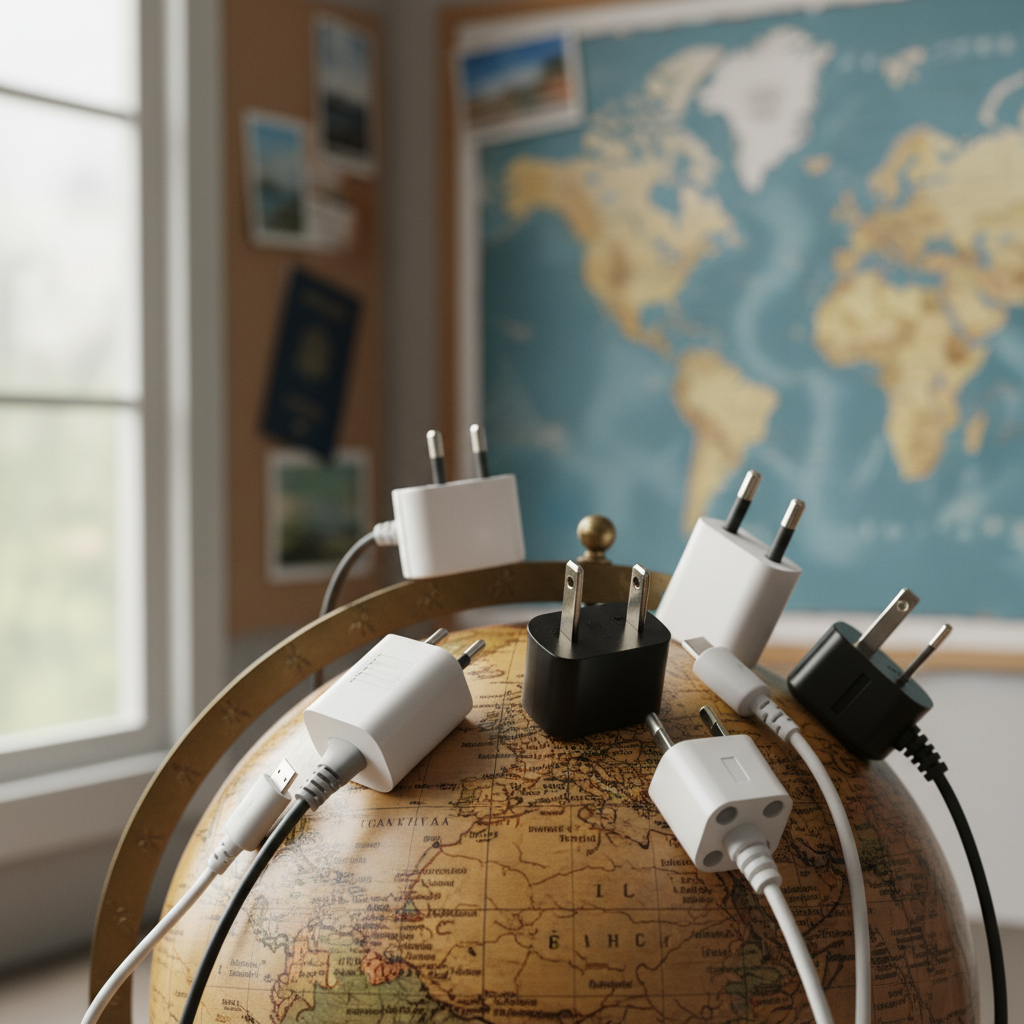

Understanding the Role of Plug Adapters in International Mobility
Every year, countless entrepreneurs and investors find themselves needing to connect their devices across borders. While phones, laptops, and chargers are essential tools, one often overlooked element is the plug adapter. Selecting the right adapter is more than a matter of convenience; it can impact the safety of your devices and even your work efficiency abroad.
The Basics: What Is a Plug Adapter?
A plug adapter is a device that allows your electronic device's plug to fit into different types of sockets around the world. It does not convert voltage; its purpose is solely to adapt the physical connection between your device and the foreign outlet. Because electrical standards vary between countries, understanding the nuances of plug adapters is key to maintaining reliable and safe device operation.
Different Types of Plug Standards Worldwide
- Type A and B: Commonly used in North America and parts of Central America. Type A features two flat parallel pins. Type B adds a grounding pin.
- Type C: Known as the Europlug, with two round pins. Widely used across Europe, South America, and parts of Africa.
- Type D: Three round pins arranged in a triangle, standard in India.
- Type G: Rectangular pins, used in the United Kingdom and some Asian countries.
- Type I: Flat pins with a grounding pin, used in Australia and New Zealand.
Each standard reflects specific safety and electrical requirements, tailored for the regional voltage and currents.
Why Voltage Compatibility is Just as Important
While plug adapters handle physical connection differences, voltage can vary significantly between countries—most notably between 110-120V and 220-240V regions. Using a device not rated for the local voltage can lead to damage, overheating, or even fires. Always check your device’s voltage specification before plugging into a foreign outlet.
How to Choose a Suitable Plug Adapter
- Identify the socket types of your destination country: Check the standard used there and select an adapter compatible with that type.
- Assess your devices' voltage and power requirements: Determine if your device is dual voltage (e.g., 100V-240V). If not, consider a voltage converter in addition to the adapter.
- Opt for quality and safety certifications: Use adapters that meet safety standards and bear certifications from recognized authorities to reduce risks.
- Portability and versatility: For active entrepreneurs on the move, a compact, multi-region adapter is often the most practical choice.
Safety Tips for Using Plug Adapters Abroad
- Test before use: Plug in devices outside your primary working hours to ensure everything functions properly.
- Avoid overloading: Do not connect multiple high-power devices to a single adapter or extension cord.
- Consider a universal adapter: These typically include multiple plug types and, often, built-in voltage conversion features.
- Be mindful of the environment: Never leave adapters plugged in unnecessarily, and unplug devices when not in use to prevent power surges.
Beyond Adapters: When to Use Voltage Converters or Transformers
If your devices are not dual voltage, a voltage converter becomes necessary. Adapters only solve the physical fit issues; they do not change electrical voltage. Portable converters are suitable for short-term travel, while transformers are more robust for longer-term relocations, especially if multiple devices require power conversion.
In Summary
Choosing the right plug adapter involves understanding the socket types of your destination, verifying your devices’ voltage compatibility, and prioritizing safety features. Proper selection ensures your devices operate reliably, reducing the risk of damage or safety hazards while abroad. As a globally minded entrepreneur, keeping this knowledge at hand minimizes disruptions and keeps your productivity seamless regardless of where you are in the world.